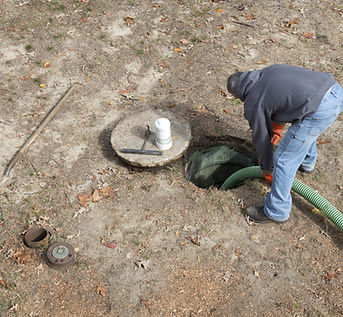
Septic Inspections
Buying a home with a septic system is a bit like buying a car without looking under the hood—except the "engine" is buried in the backyard and filled with wastewater. Since a septic system is one of the most expensive components of a property, a professional inspection is your best defense against a literal and financial mess.
A malfunctioning system doesn't just smell bad—it’s a biohazard. Leaking sewage can contaminate groundwater, nearby wells, and local ecosystems with harmful bacteria and nitrates.
Here is what we look for.
. The Septic Tank (The Core)
We locate and uncover the tank lids to examine the following:
-
Sludge and Scum Levels: We measure the thickness of the "scum" (top layer) and "sludge" (bottom layer). If these take up more than 33% of the tank's total volume, it needs an immediate pump-out.
-
Structural Integrity: We check for cracks, corrosion (especially in concrete tanks), or root intrusion that could cause leaks.
-
Baffles and Filters: These are critical "guards" that prevent solids from escaping into your drain field. Inspectors check if they are intact, clogged, or missing.
-
Liquid Level: If the water is too high, the drain field is likely failing. If it's too low, the tank itself probably has a leak.
2. The Drain Field (The Disposal)
This is the most expensive part of the system to replace. The inspector looks for:
-
Hydraulic Stress: We may perform a "flow test" by running several hundred gallons of water in the house to see if the drain field can keep up.
-
Surface Signs: They look for "septic plumes"—patches of unnaturally lush, bright green grass—or soggy, "spongy" soil and standing water, which indicate the system is backing up.
-
Odors: Strong sewage smells near the field are a major red flag for surfacing effluent.
3. Interior Plumbing & Lines
-
Flow Consistency: We check that wastewater is moving smoothly from the house to the tank without blockages.
-
Fixture Check: We look for leaking toilets or faucets that might be "silently" overloading the system with thousands of gallons of excess water per month.
4. Distribution Box (D-Box)
If your system has one, the inspector will check this small box to ensure effluent is being distributed evenly across all lines of the drain field. If one line is dry and another is flooded, the system will fail prematurely.